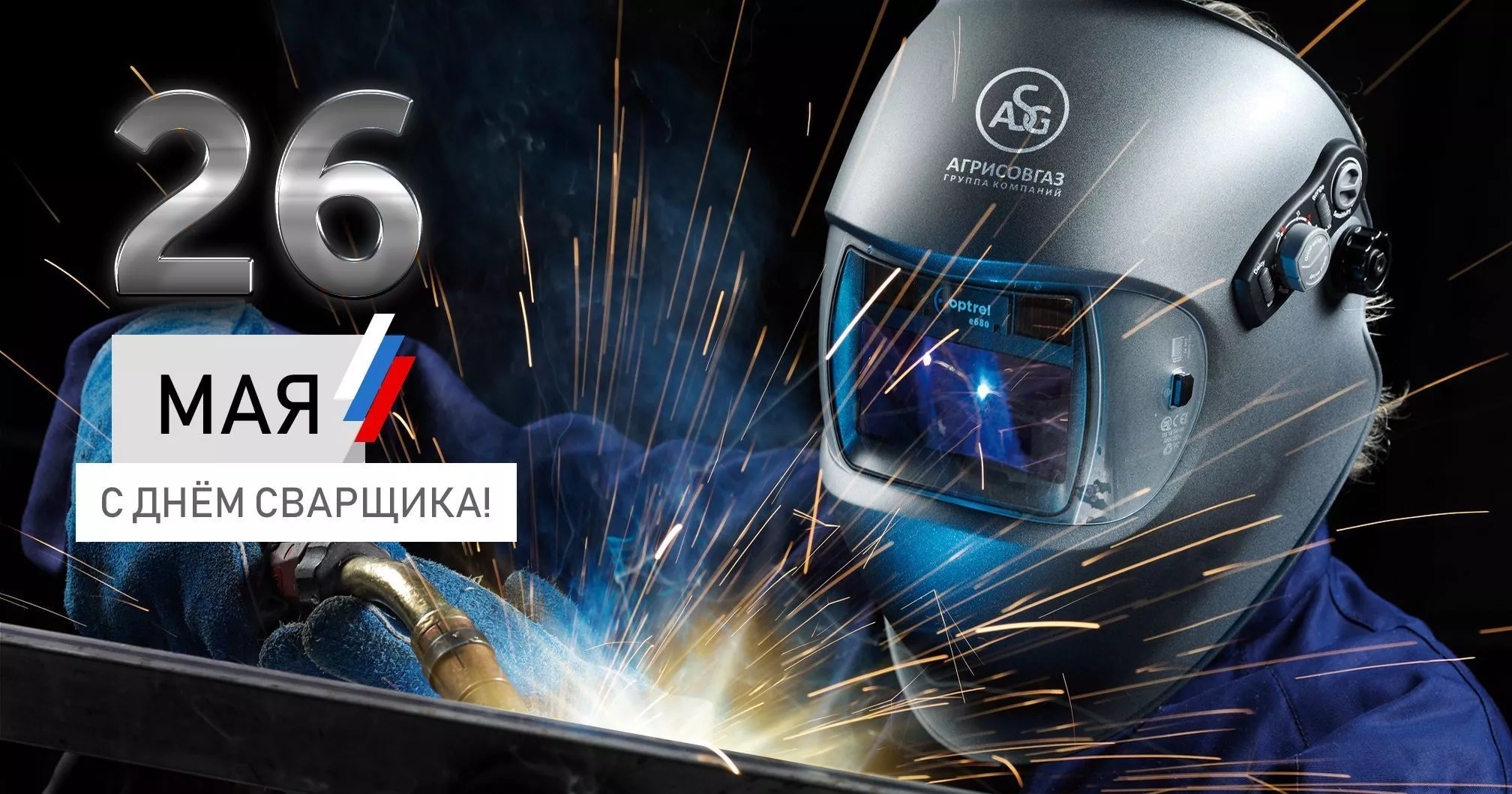


In Russia, welders celebrate their professional holiday every last Friday in May. This date isn't officially recognized, but it has a long history—it's been celebrated since the early 1990s.
The profession of welder emerged in 1802, when Russian scientist Vasily Petrov discovered the effect of an electric arc, which creates a high temperature between two carbon electrodes, allowing metal to melt. This discovery soon found practical application, giving rise to electric welding.
In the late 19th century, engineer Nikolai Slavyanov built the first direct current machine, which was the source of a welding arc—the first prototype of a welding machine. In 1935, the modern electrode was invented, allowing welding to supplant riveting. As a result, by the 1940s, Soviet enterprises were using over 50,000 welding machines, requiring a huge number of specialists, who were trained first directly at the factories and later in vocational schools.
Today, no industry can function without welding, as the modern world is a world of metal. This profession is especially in demand in construction, the automotive industry, and mining. There are many types of welding, each with its own corresponding welder specialization. The strength of structures, including residential buildings, and therefore, human lives, depends on the skill of specialists.
On this day, we wish you professional success, new accomplishments, and the successful implementation of all your plans and ideas!
May your work always bring you joy, and may the structures you create be durable for centuries!
Happy Holidays!
Happy Welder's Day!
26|05|2023